




How to Choose Residential Wall Fence: A Practical Guide for International Trade
How to Choose Residential Wall Fence: A Practical Guide for International Trade
Choosing a residential wall fence requires balancing aesthetics, safety, privacy, durability, and cost efficiency. Unlike industrial or road fences, residential wall fences focus more on integrating with the residential environment, ensuring household safety, and protecting privacy, while meeting the compliance standards of the region where the residential area is located. Below is a detailed guide tailored to residential wall fence selection, suitable for international trade scenarios and aligned with global universal standards.
I. Core Requirements for Residential Wall Fences
Residential wall fences differ from other types of fences in their core positioning, which determines the direction of selection. The key requirements are as follows:
Aesthetics: It should integrate with the architectural style of the residential area (such as modern, European, or minimalist) without being obtrusive, and even enhance the overall beauty of the community.
Safety: It should have basic anti-climbing and anti-overturning performance to prevent unauthorized entry and ensure the safety of residents, especially children and the elderly.
Privacy Protection: It should effectively block the line of sight from the outside to avoid exposing the residential yard or interior to public view.
Durability: It should adapt to outdoor environments (sunlight, rain, temperature changes) and have good corrosion resistance and wear resistance, reducing later maintenance costs.
Compliance: It should meet the height, material, and safety standards of the local residential area, avoiding violations of relevant regulations.
II. Step-by-Step Selection Guide for Residential Wall Fences
1. Determine the Fence Height (Based on Privacy and Safety Needs)
The height of residential wall fences is usually regulated by local laws and regulations, and it is necessary to first confirm the compliant height range to avoid legal risks. Generally, the common height range is 1.5-2.0m, which can balance privacy and safety
1.5-1.8m: Suitable for low-rise residential areas or communities with good security management, focusing on basic privacy protection without affecting the overall landscape.
1.8-2.0m: Suitable for middle and high-end residential areas or families with higher privacy and safety requirements, which can effectively prevent climbing and enhance privacy.
Note: Avoid excessively high fences (exceeding 2.2m in most regions) to prevent affecting the lighting of adjacent houses and violating local regulations.
2. Select the Right Material (Balance Durability and Aesthetics)
The material of residential wall fences directly affects its service life, aesthetics, and maintenance cost. Combined with international trade procurement needs, the commonly used materials are as follows, which can be selected according to the climate of the residential area and the budget:
Aluminum Alloy Fence: Lightweight, corrosion-resistant, and easy to process. It can be made into various styles (such as hollow, solid, or patterned) to adapt to different architectural styles. It requires no frequent maintenance, is suitable for most climates (including coastal high-humidity areas), and is a popular choice for middle and high-end residential areas. Its service life can reach 15-20 years.
Stainless Steel Fence (304, 316 Grades): Excellent corrosion resistance and durability, especially 316 stainless steel, which is suitable for coastal saline-alkali areas. It has a simple and sleek appearance, is easy to clean, and requires almost no maintenance. The disadvantage is that the cost is slightly higher, and it is suitable for families with high budget and durability requirements.
Carbon Steel Fence (Galvanized + Powder Coated): Cost-effective, with moderate strength. After galvanizing and powder coating, it has good corrosion resistance and can be customized into various colors (such as white, gray, or brown) to match the residential environment. It is suitable for ordinary residential areas with limited budget, and its service life is 8-12 years with regular maintenance.
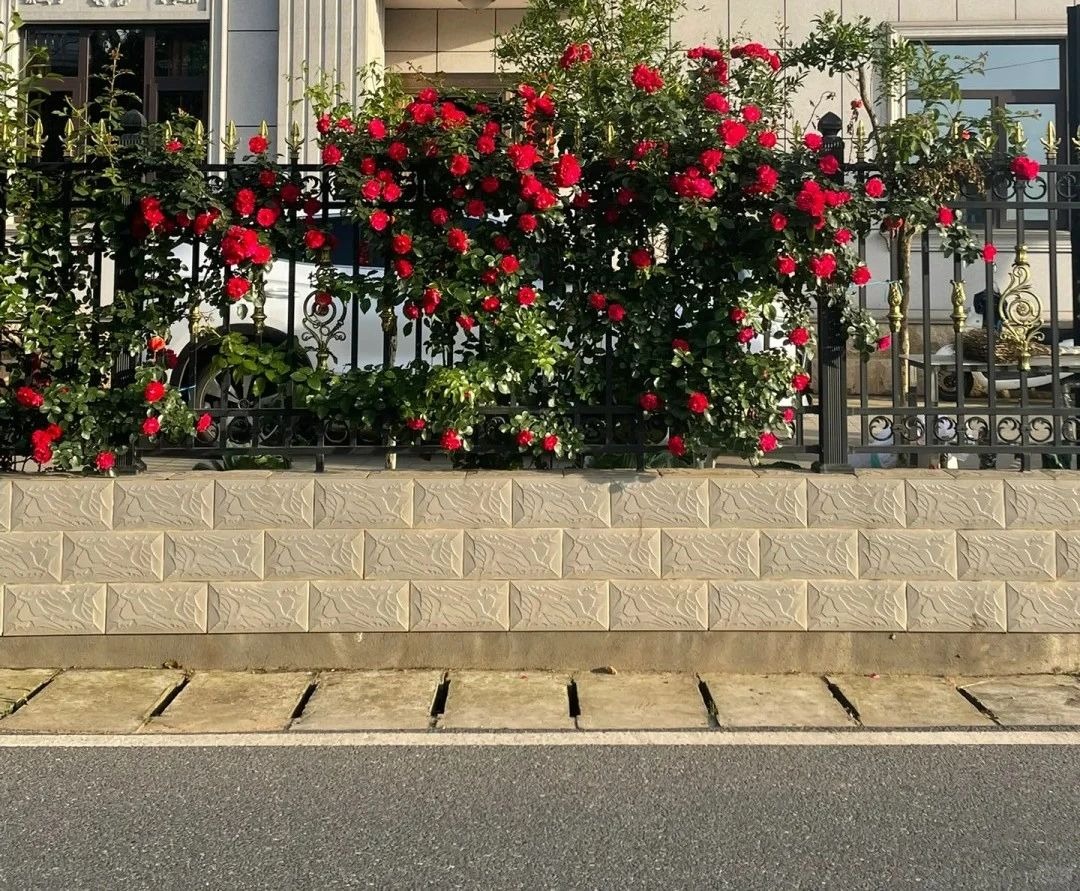
Wrought Iron Fence: Strong decorative performance, can be made into complex patterns, suitable for European-style or classical residential areas. It needs regular anti-rust treatment (painting) to avoid rust, and the maintenance cost is slightly higher. It is suitable for families who pursue aesthetic uniqueness.
3. Choose the Appropriate Structure and Process (Combine Safety and Aesthetics)
The structure and process of residential wall fences should not only ensure safety but also avoid being too sharp (to prevent accidental injury, especially to children). The mainstream processes suitable for residential areas are as follows:
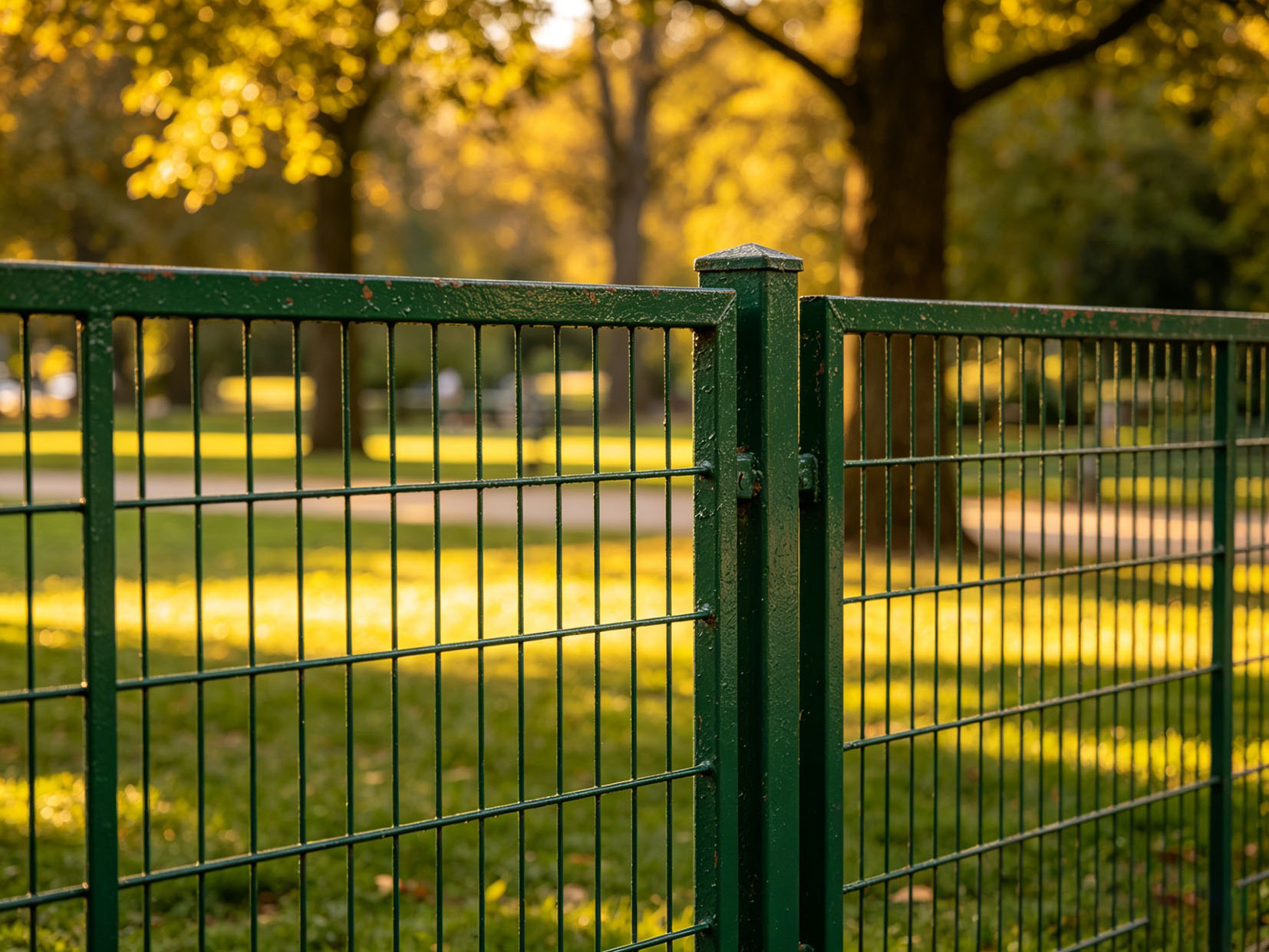
Welded Fence (Modular Design): Sturdy structure, strong integrity, and flat surface. It is usually designed with modular components, which is convenient for cross-border transportation and on-site installation. The top of the fence can be designed as a rounded or flat shape (avoiding sharp points) to ensure safety. It is suitable for most residential areas, and the style can be customized according to needs.
Punched Fence: It can be customized with different pore shapes (such as oval, square, or decorative patterns) to balance ventilation and privacy. The surface is smooth, aesthetically pleasing, and easy to clean. It is suitable for modern residential areas that pursue simplicity and fashion.
Woven Fence (Decorative Type): Usually made of aluminum alloy or stainless steel wire, with good flexibility and air permeability. It can be matched with green plants (such as ivy) to enhance the natural beauty of the residential area. It is suitable for low-rise residential areas or yards that focus on landscape integration.
4. Confirm Key Specification Parameters
Mesh Size (If Applicable): For woven or punched residential fences, the mesh size should be 50×50mm or 60×60mm, which can block the line of sight and prevent small animals from entering, while ensuring certain ventilation. Avoid too large mesh (more than 100×100mm) which will affect privacy, and too small mesh (less than 30×30mm) which will affect ventilation and increase costs.
Wire Diameter/Thickness: For aluminum alloy and stainless steel fences, the wire diameter is usually 2.5-3.5mm, which can ensure sufficient strength; for carbon steel fences, the wire diameter is 3.0-4.0mm, and the thickness of the fence panel is 1.5-2.0mm to avoid deformation.
Surface Treatment: For dry areas, powder coating is preferred (aesthetic, low cost, and various color options); for humid or coastal areas, hot-dip galvanizing + powder coating is preferred, which can double the corrosion resistance and extend the service life
5. Additional Notes for International Trade Procurement
Compliance Check: Confirm that the fence’s height, material, and safety performance meet the local regulations of the residential area (such as the United States, Europe, or Southeast Asia), and provide relevant certification documents if necessary (such as ISO, ASTM standards).
Installation Convenience: Choose modular fences with standardized components to facilitate cross-border transportation (reducing transportation volume) and on-site installation, which can save construction time and labor costs.
After-Sales Service: Prioritize manufacturers with global after-sales capabilities, who can provide timely technical support and spare parts supply in case of installation or maintenance problems.
Cost Control: For ordinary residential projects, choose galvanized carbon steel fences with powder coating to balance cost and durability; for high-end residential projects, choose aluminum alloy or 304 stainless steel fences to improve the grade and reduce maintenance costs.